“You are what you eat” rings especially true when considering oysters and their unique taste profile. Oysters exhibit an impressive range of flavors, heavily influenced by their surroundings. This is due to how they feed—oysters filter water through their gills, absorbing the particles they need while releasing the rest. Interestingly, the gills are also the outermost part of the oyster meat we consume. By filtering out excess organic particles, oysters help prevent harmful algal blooms. In fact, a single oyster can filter up to 50 gallons of water a day, feeding on the surplus nutrients that might otherwise contribute to these blooms, often caused by farm runoff or residential lawn care.
Diet is a key factor in shaping not only an oyster’s flavor but also its growth rate, shell strength, seasonality, safety, and even color. That’s why it’s essential to pay close attention to the farm or location your oysters come from. This awareness highlights the importance of maintaining a healthy ocean, as the balance of sea creatures and plants directly impacts the quality of our seafood.
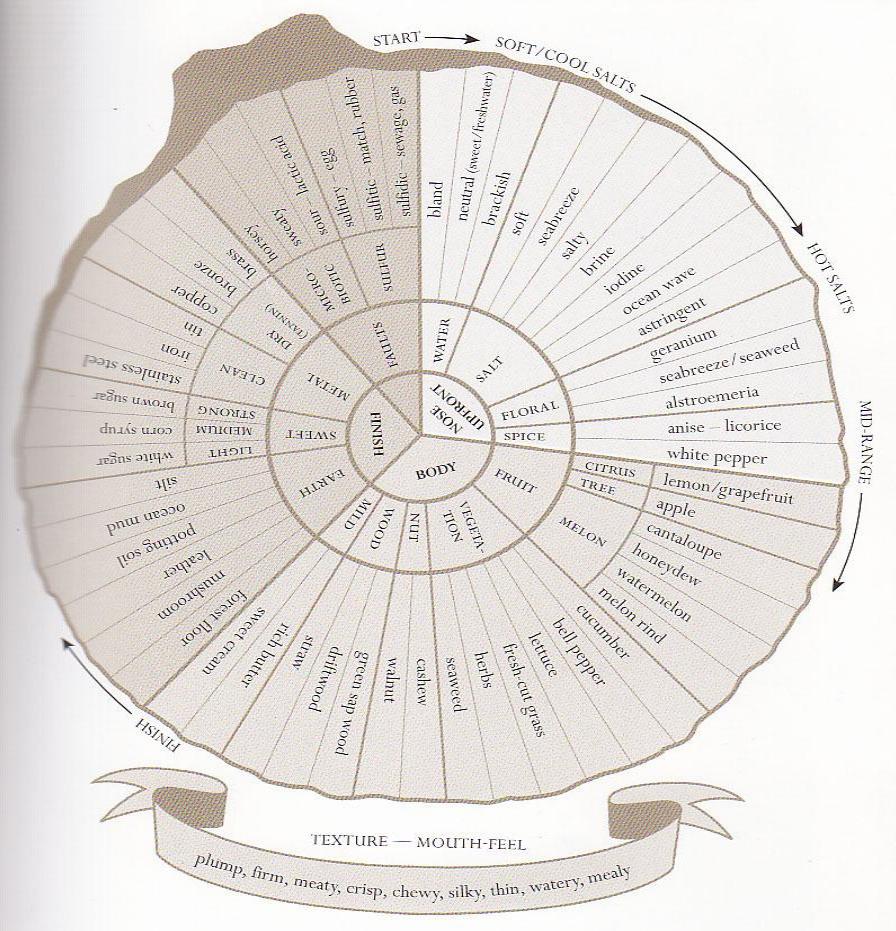
I’ve attached a flavor wheel created by Patrick McMurray, a world-renowned oyster shucker (check him out here: Patrick McMurray’s Instagram). Much like a wine tasting wheel, this tool can help you identify and appreciate the distinct flavors of different oysters.
Example: Kumamoto Oysters (West Coast, USA)
Flavor Profile: Sweet, buttery, and mildly briny.
Kumamotos are small with deep cups, known for their rich, creamy texture. They have a mild brininess, balanced by a hint of melon or cucumber.
 Salt-E Oysters & Catering
Leave a comment